
Objects
Enter a word or phrase to perform a general search across all records in the Objects catalog. You can also browse records in the catalog without performing a search.
Search Tips
- Searches are not case sensitive.
- Searching for multiple words connects them with OR by default. Matching records can contain any of the words.
- Connect multiple words with AND if you only want to see records containing both words.
- Use quotation marks to search for a phrase.
- Place an asterisk (*) at the end of a word as a wildcard.
1637 results found. Records searched: 1637
-
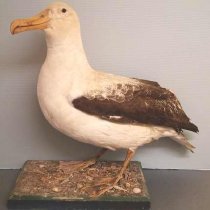
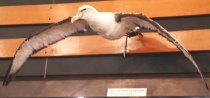
Specimen, Mounted - Historic mounted toroa/royal albatross specimen on a wooden base with shells and sand underfoot.
Record Type: Object
-
Specimen, Mounted - Male NZ shoveller duck mounted in flight on a piece of wood.
Record Type: Object

-
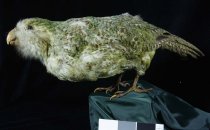
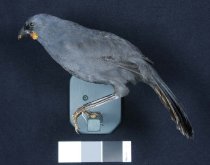
Specimen, Mounted - Mounted kakapo specimen on square of wood covered with black paper. Specimen low-set in posture. unknown prevenance.
Record Type: Object
-
-
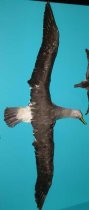
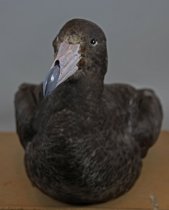
Specimen, Mounted - Mounted specimen of Buller's mollymawk, found beach wrecked autumn 2003, Orari rivermouth area, South Canterbury.
Record Type: Object
-
-
-
-
-

-
-
-
-
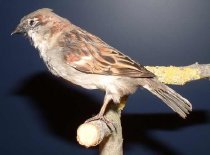
Specimen, Mounted - Mounted specimen of male house sparrow. Specimen found dead in Timaru garden, 2003.
Record Type: Object
-
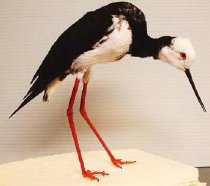
Specimen, Mounted - Mounted specimen of pied stilt. Collected coastal Orari area June 2001.
Record Type: Object
-
-
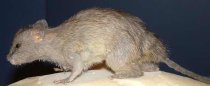
Specimen, Mounted - Mounted specimen of ship rat. Rat caught in trap in Timaru urban garden in area with occasional rat population influxes in gardens and outbuildings
Record Type: Object
-
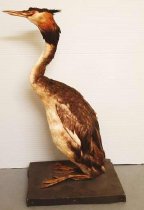
Specimen, Mounted - Mounted specimen of the Australasian crested grebe. No locality data.
Record Type: Object
-
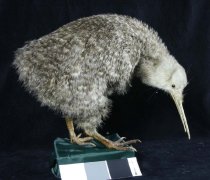
Specimen, Mounted - Mounted specimen of the Little Spotted Kiwi, no locality data.
Record Type: Object
-
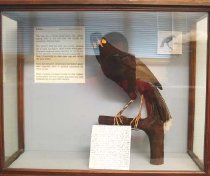
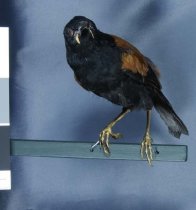
Specimen, Mounted - Mounted specimen of the South Island saddleback. Originally housed in larger Victorian bird cabinet.
Record Type: Object
-
-
-
Specimen, Mounted - Mounted specimen of whekau/laughing owl. Specimen rather hunched, legs folded down. twisted toes. Unknown locality.
Record Type: Object

-
-
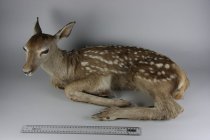
Specimen, Mounted - Red deer fawn mounted in resting position, folded legs, head up. Specimen from a deer farm in Peel Forest area.
Record Type: Object
-
-
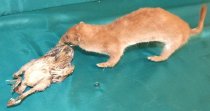
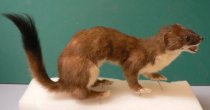
Specimen, Mounted - Stoat, summer coat, trapped in the Orari River riverbed during pest control work, 2009.
2009
Record Type: Object
-
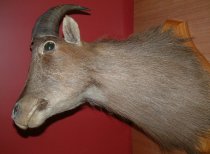
Specimen, Mounted - Thar head mounted on a wooden shield-shaped board, 1973. The back of the board reads "Shot at Glen Tanner Station, 4th June 1973."
04/06/1973
Record Type: Object
-
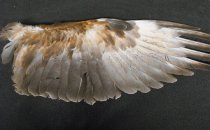
Specimen, Mounted - The wings, tail, legs and feet of an Australasian Harrier Hawk recovered from a road kill specimen from an unknown Canterbury location.
Record Type: Object
-

-
-
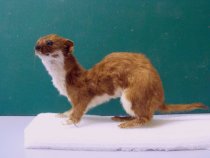
Specimen, Mounted - Weasel, male, caught on the Orari River as part of the Orari River protection management. September 2009. Has been mounted in a standing position.
September 2009
Record Type: Object
-
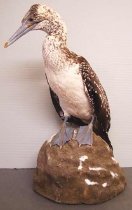
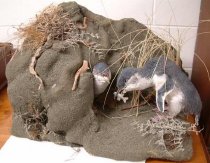
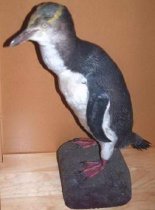
Specimen, Mounted - Yellow-eyed penguin mounted standing on rock-like stand. Beach wrecked Orari Rivermouth area August 2003.
Record Type: Object
-

-
-
-

-
-
-
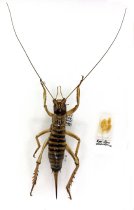
Specimen, Orthoptera - Large male tree weta (Hemideina femorata). Found dead in pasture near forest and scrub remnant, Gapes Valley, Geraldine. Has been prepared for display - eviscerated and abdomen stuffed with cotton wool. Mounted in lifelike pose with antennae straight out.
03/03/2006
Record Type: Object
-
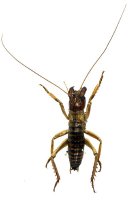
Specimen, Orthoptera - Tree Weta mounted on pin. Dead in picnic shelter, Podacarp / broadleaf forest. With four eggs from abdomen Peel Forest, SC. 05/04/2006.
Record Type: Object
-
-
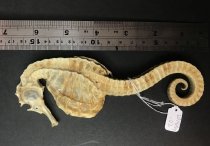
Specimen, Pisces - Dried seahorse specimen, caught off Timaru coastline in 1970s.
Record Type: Object
-
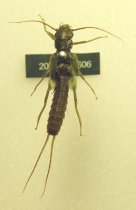
Specimen, Plecoptera - Green stonefly nymph. Under stone in shallow muddy stream, slow moving water. Otaio River, SH1, August 2005.
Record Type: Object
-
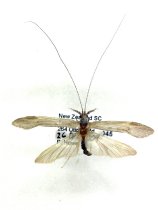
Specimen, Tooth - Three shark's teeth, from a rock bed, Pareora River - Evans Crossing area.
Record Type: Object

-
-
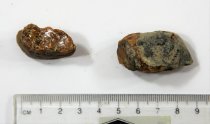
Specimen, amber - Small pieces of fossilised amber, recovered from fossil site on Tengawai River, Sutherlands area near Pleasant Point.
Record Type: Object
-
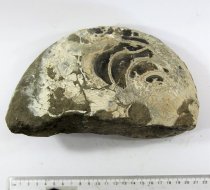
Specimen, bivalve - Fossil bivalve: Cucullaeidae Cucullaea sp? Two different bivalves in sandstone matrix.
Record Type: Object

-
Specimen, bivalve - Fossil bivalve: Cucullaeidae cucullaea (Latiarca) worthingtoni (Hutton, 1873b)
Record Type: Object

-
Specimen, bivalve - Fossil bivalve: Cucullaeidae cucullaea (Latiarca) worthingtoni (Hutton, 1873b)
Record Type: Object
